
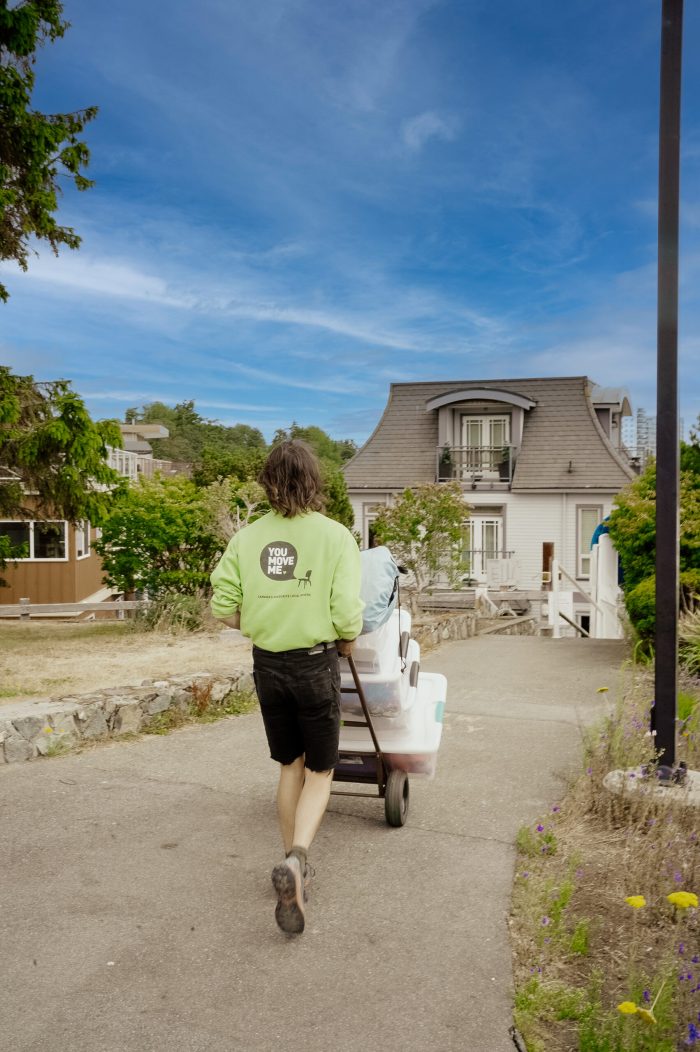
Quick Answer: Moving from Ontario to Vancouver Island is a cross-country haul plus a ferry. The truck crosses four provinces over five to six days, then sails from Tsawwassen or Horseshoe Bay to Victoria or Nanaimo. You Move Me Vancouver Island sends one crew to load in Ontario, drive the whole route, ride the sailing, and unload at your island door on a delivery day set at booking.
Moving from Ontario to Vancouver Island is the longest move a Canadian household can make without leaving the country. It ends with the only part no mainland move has: a boat. Retirees, remote workers, and families make this trip every year for the mild winters and the ocean, and most of them have never planned a move with a ferry in it. So this guide walks through the four legs of the drive, the ferry choice that decides your landing, what changes when you arrive, and where Ontario arrivals tend to settle.
Why Ontario Keeps Heading for the Island
Winter is the first reason. The south Island rarely sees hard frost, and snow at sea level is a story people tell. Retirement is the second, and our guide to retiring to Victoria BC covers that move in full. Remote work made the third group possible, because a Toronto salary stretches a long way in Nanaimo or the Comox Valley. Add the ocean, the trails, and a slower pace, and the pull is easy to understand. The distance is the only real obstacle.
The Four Legs of the Drive
The route breaks into four pieces, and each one has its own character.
- Ontario to the Prairies. The Trans-Canada leaves Southern Ontario and runs the long north shore of Lake Superior before opening onto Manitoba. This is the emptiest stretch, with long gaps between towns.
- Across the Prairies. Winnipeg, Regina, and Calgary pass in a straight run of flat highway. Fast in summer, exposed to wind and ice in winter.
- Over the Rockies to the coast. Highway 1 climbs through Banff and the Kicking Horse, then the Coquihalla drops the truck into the Lower Mainland. This leg decides the winter schedule.
- The ferry. From the terminal, ninety minutes to two hours on the water to the island.
Total distance runs about 4,400 kilometres from Toronto, more from Ottawa. A loaded truck takes five to six days on the road before the sailing. We set the delivery day at booking and plan the overnights around it.
The Ferry Choice Decides Your Landing
Two terminals serve the island, and the right one depends on where you are going. Victoria, Saanich, Sidney, and Langford are served by the sailing from Tsawwassen to Swartz Bay, which lands a short drive from downtown Victoria. Nanaimo, Parksville, and the Comox Valley are served by the sailings from Tsawwassen to Duke Point or Horseshoe Bay to Departure Bay. A moving truck needs reserved deck space, and check-in windows are strict. So we book the sailing when we book the crew and build the last driving day around it. Our post on moving off Vancouver Island by ferry explains the terminal mechanics in the other direction, and they apply the same way coming in.
One Crew From the Ontario Driveway to the Island Door
Most quotes for this route come from national van lines. Their model is a consolidated trailer that stops at a depot in Ontario, another on the Prairies, and a third on the mainland before a partner firm carries the load across the water. Your household gets handled by four crews and arrives inside a window that can stretch to three weeks. Our long distance movers on Vancouver Island do it differently. The crew that loads your Ontario home drives the whole route, rides the sailing with the truck, and unloads at your door. Nobody hands your things off, and no other household’s boxes share the truck. Every mover is a full-time employee on our payroll, trained and certified in house.
Timing the Move
Two stretches shape the calendar. Lake Superior’s north shore and the Rocky Mountain passes both close in winter storms, so November through March dates carry a weather buffer. Ferry reservations fill in summer, especially on weekends and holidays, so a July move needs the sailing booked early. Retirees tend to move in spring and early fall, which makes May and September busy on this route. So the calmest windows are April, June, and October. Book six to eight weeks ahead for any summer date.
What Changes When You Land in BC
- Sales tax. Ontario’s HST becomes BC’s separate PST and GST. The combined rate is similar, but it applies differently to some purchases.
- Licence and plates. New residents have 90 days to swap an Ontario licence and registration for BC versions, and auto insurance runs through ICBC.
- Health coverage. Apply for BC’s Medical Services Plan as soon as you arrive. Ontario coverage bridges the gap for a short period.
- Time zone. The island runs on Pacific time, three hours behind Ontario. Your family will call early for months.
- The climate. Grey, wet winters instead of cold ones. Wood furniture and instruments need a few weeks to settle into the coastal humidity.
Where Ontario Arrivals Tend to Land
Retirees usually look at Sidney, Oak Bay, and the Saanich Peninsula for the village cores and the walkability. Families and remote workers from Toronto’s suburbs find newer homes and more space in Langford and the West Shore. Anyone who wants the mid-island lifestyle at a lower price lands in Nanaimo or up the coast in Comox and the Comox Valley. The city itself pulls people who want the harbour and the old brick, and our Victoria movers page covers how we work downtown. If you are landing in a strata building, we book the service elevator and the loading bay before the sailing.
Packing for 4,400 Kilometres and a Boat
Six days of highway, two mountain ranges, and a ferry deck shake every box. Marine air on the crossing adds one more reason to wrap wood and electronics properly. Our packing services can handle the whole home, the kitchen only, or a single tricky piece. Wardrobe boxes for hanging clothes come free with every move. Propane, fuel, and pressurized cans cannot ride on the ferry, so use them up before move day.
Ready to Cross the Country and the Strait?
Tell us your Ontario address, your island destination, and the dates you have in mind. We will plan the legs, book the sailing, confirm a delivery day, and explain how our estimate works with no hidden charges. Request a free estimate, or call You Move Me Vancouver Island at (250) 220-7242. Canada’s Favourite Local Movers will have the coffee ready when the truck rolls off the ferry.